
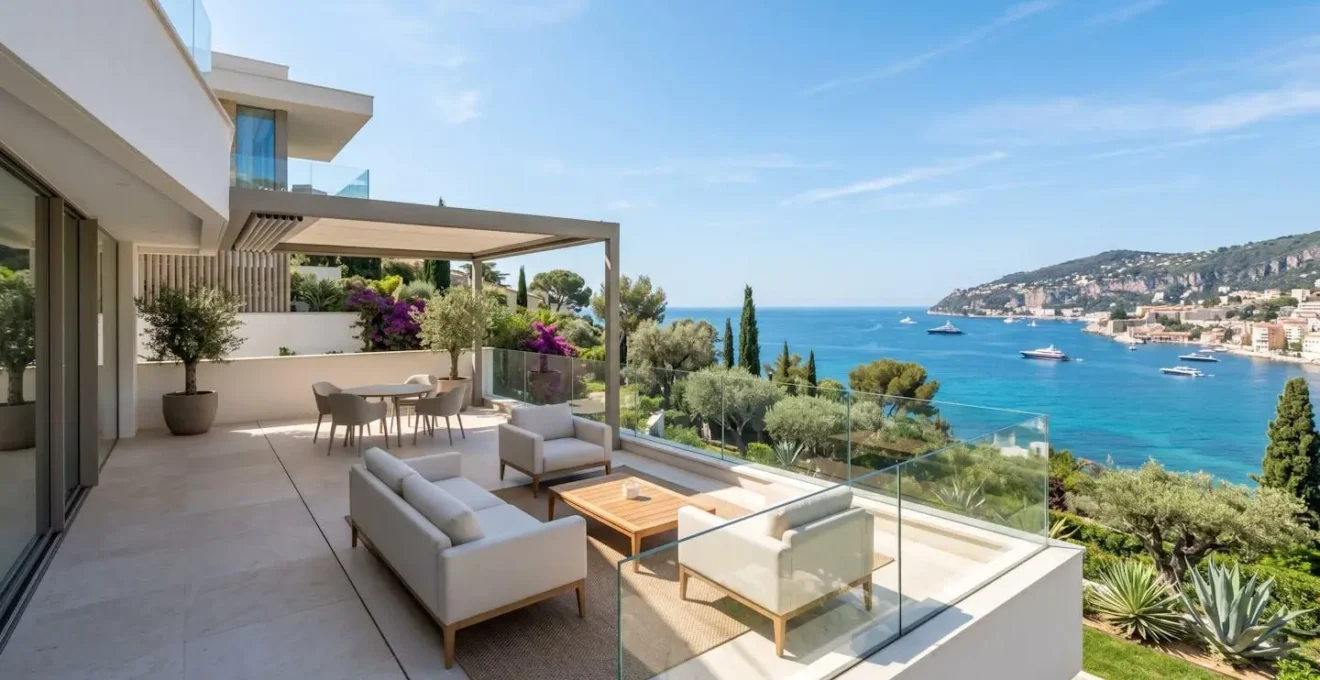
The luxury accommodation sector no longer operates on binary choices. For decades, affluent travelers selected either the seclusion of a private villa or the comprehensive service infrastructure of a five-star hotel. That trade-off has fundamentally dissolved. Market forces—accelerated by post-2020 behavioral shifts and sustained UHNW population growth—now favor integrated models where residential privacy coexists with hospitality-grade coordination. The French Riviera, particularly Saint-Tropez and Ramatuelle, represents ground zero for this recalibration. Properties that once competed solely on square meters or sea views now differentiate through invisible service architectures: concierge systems designed to operate without physical intrusion, delivering hotel responsiveness while preserving the domestic intimacy that drives villa appeal.
The villa-plus-service model in four quick insights:
- Post-2020 wealth concentration shifted demand toward private estates with professional coordination rather than traditional hotel infrastructure
- Remote concierge protocols (WhatsApp-based, schedule-controlled access) preserve residential privacy while delivering service responsiveness
- À la carte frameworks let clients activate only the coordination they need—culinary, maritime, wellness, experiential—avoiding bundled package waste
- Two-decade local networks secure access to saturated venues and vetted practitioners that independent renters cannot reach alone
This recalibration reflects a fundamental shift in how affluent travelers define luxury hospitality. Where previous generations equated premium accommodation with hotel infrastructure—concierge desks, uniformed staff, 24/7 front desk presence—today’s ultra-wealthy prioritize environmental control and schedule autonomy. The question is no longer whether to choose villa privacy or hotel service, but how to integrate both without compromise.
Understanding this integration requires examining three dimensions: the market forces that enabled it, the operational protocols that deliver it, and the decision frameworks that optimize it for different traveler profiles. The following analysis addresses each dimension, drawing on recent sector data, established operator models in the Saint-Tropez market, and documented guest preferences across demographic segments.
How the luxury rental market redefined the privacy-service equation
Between 2020 and 2025, the luxury tourism sector experienced a structural pivot. As Bain & Company’s 24th annual luxury study confirmed, experiential indulgence—hospitality, fine dining, wellness travel—accounted for all net growth in the €1.44 trillion global luxury market during this period, while product-based consumption stagnated. Within that experiential category, private accommodations with integrated service delivery captured disproportionate market share.
The primary driver was behavioral: ultra-high-net-worth travelers, numbering approximately 510,810 individuals globally as of mid-2025 according to WATG Advisory’s sector analysis, began prioritizing control over their immediate environment without sacrificing coordination capacity.
510,810individuals
Global UHNW population with net worth above $30 million (mid-2025)
This population expansion drives corresponding market growth. As EHL Hospitality Insights consolidated data for 2025 confirms, the luxury tourism market is projected to reach $1.2 trillion by 2026, with Gen X and Millennials leading demand for exclusive, tailored experiences that prioritize personalization over standardized hotel programming.

This demographic reality reshaped supply-side offerings. Operators providing St Tropez villas for rent responded by embedding concierge infrastructure into residential properties rather than maintaining separate hotel-style facilities. The model that emerged—exemplified by specialists with 20-plus years in the Saint-Tropez market—positions service delivery as an opt-in layer rather than a physical presence. Guests occupy entire estates (typically 200 to 500 square meters accommodating 8 to 14 individuals) while concierge coordination occurs remotely through digital channels, activating only when clients request specific interventions: restaurant access, private maritime charters, in-villa culinary execution, wellness practitioners.
The economic logic is straightforward. Hotel suites impose structural compromises: shared spaces, fixed schedules, proximity to other guests, limited square meters per occupant. Villas eliminate those constraints but historically demanded self-coordination—a time burden that defeats the purpose of leisure. Integrating professional concierge capacity without requiring clients to cede residential exclusivity solved the coordination problem while preserving the spatial and temporal autonomy that justifies villa economics.
The operational mechanics behind seamless, invisible service
Service quality in this context depends entirely on protocol architecture. The term « invisible service » describes a delivery model where coordination happens without staff physically occupying shared space with guests except during scheduled service windows. Communication runs through asynchronous channels—primarily WhatsApp, supplemented by voice when complexity requires real-time dialogue. Concierge professionals assigned to specific bookings (not shared across multiple properties, a critical distinction) monitor client needs, coordinate third-party providers, and resolve logistical obstacles without entering the villa uninvited.
This operational framework embodies what the real estate and hospitality sectors now recognize as a discreet vision of luxury where service excellence operates quietly in the background, preserving the intimate character of private residential stays. The most sophisticated operators train concierge teams to distinguish between proactive suggestion (appropriate) and intrusive initiation (counterproductive). A sample morning interaction: concierge sends a message confirming a beach club reservation secured for lunch, notes boat availability if desired for the afternoon, then goes silent unless the client responds. No follow-up calls, no physical check-ins, no presence unless explicitly requested.
Operational scenario: Multi-generational group, high-season Ramatuelle villa
Consider a typical August booking: family of eight (three generations) occupying a five-bedroom estate for ten days. Day one, concierge initiates contact via WhatsApp to confirm arrival logistics and review initial preferences. Day three, teenagers request same-day dinner reservation at a saturated Saint-Tropez venue. Concierge leverages two-decade venue relationships to secure 20:30 seating within ninety minutes—access individual callers cannot obtain. Day five, grandparents prefer in-villa dining; private chef coordinates arrival time, executes four-course meal, departs by 22:00. Family never encounters concierge physically. Day seven, parents want complete solitude—concierge receives « off today » message, ceases all proactive outreach. Day nine, urgent pool heating malfunction. Concierge dispatches technician, supervises repair, confirms resolution—guests experience zero friction.
The pattern reveals what differentiates integrated service from basic property management: dedicated human coordination capacity that operates as an extension of the guest’s own decision-making rather than a separate hospitality apparatus requiring interface effort.
Staff access protocols reinforce this invisibility principle. Housekeeping, pool maintenance, and grounds care occur during pre-agreed windows when guests are typically off-property or have explicitly approved the timing. Private chefs, wellness practitioners, or activity coordinators arrive only for scheduled sessions. The villa functions as genuinely private residential space rather than semi-public hospitality infrastructure with unpredictable staff circulation—a distinction that matters acutely to the UHNW demographic, which as industry observers have documented in recent sector analyses, deliberately safeguards privacy and moves in circles that eschew exposure.
À la carte vs all-inclusive: the strategic value of choice
Service delivery models in the luxury villa sector cluster into two categories: bundled packages with fixed inclusions, or modular à la carte frameworks where clients activate only what they will actually use. The latter aligns more closely with UHNW behavioral preferences. These travelers resist paying for predetermined service bundles that include components irrelevant to their specific trip purpose. A couple seeking romantic seclusion has zero interest in subsidizing children’s activities embedded in an all-inclusive rate. Conversely, a multi-generational group needs extensive culinary and activity coordination but may never touch wellness services.
The à la carte approach addresses this mismatch by organizing services into discrete categories—typically culinary (Savour), wellness (Relax), experiences (Explore), and transportation (Move)—that clients select based on actual intent. Pricing transparency follows: villa rental covers accommodation and baseline concierge coordination; specific services carry separate, itemized costs disclosed before confirmation. This prevents the common all-inclusive trap where unused services inflate total expenditure while delivering zero incremental value.
Evaluating villa-with-concierge against alternative models requires multi-criteria comparison. The breakdown below contrasts three accommodation approaches across six strategic dimensions to clarify decision parameters.
| Evaluation Criterion | Villa + Dedicated Concierge | Five-Star Hotel Suite | Villa Alone (Self-Coordinated) |
|---|---|---|---|
| Privacy Level | Maximum – entire property exclusive, remote coordination | Limited – shared facilities, adjacent guests, visible staff | Maximum – complete solitude |
| Service Responsiveness | High – dedicated professional, established access | High – hotel protocols | Self-service – independent coordination |
| Customization Flexibility | Total – fully bespoke | Moderate – service menu, limited personalization | Total flexibility, total burden |
| Space Per Occupant | 200-500+ sqm for 8-14 guests | 60-120 sqm suite for 2-4 maximum | 200-500+ sqm residential |
| Cost Transparency | Clear: rental + itemized services | Variable – nightly rate, fees, charges, gratuities | Rental only, self-sourced at market |
| Multi-Generational Suitability | Optimal – private pool, flexible dining | Constrained – shared pool, restaurant schedules | Privacy advantages, logistics burden |
Market positioning also factors into the à la carte rationale. Operators competing on service depth rather than property aesthetics alone need differentiation mechanisms beyond square meters and sea views. Offering genuine customization—where a romantic couple receives culinary and experiential focus while a family with young children gets activity coordination and flexible dining—creates perceived value that generic all-inclusive rates cannot match. This personalization extends to intensity levels: some guests activate comprehensive daily coordination, while others prefer minimal baseline support with selective service touchpoints. The ability to calibrate service density to trip purpose and personal preference represents a fundamental advantage over fixed hotel programming, where service levels remain constant regardless of individual guest needs or desires.
- Family with children under 12:
Prioritize culinary services (private chef four to five evenings), in-villa childcare, and family-friendly excursions. This minimizes coordination stress while maintaining the schedule flexibility young children require.
- Couple seeking romantic seclusion:
Select one to two private chef dinners for intimate villa evenings, reservation assistance at premium restaurants, private sunset boat charter, couples wellness treatments. Blend privacy with curated experiences through selective concierge activation.
- Multi-generational group (three generations):
Deploy comprehensive coordination: daily private chef to accommodate diverse dietary needs, age-differentiated activities (teen watersports, grandparent wellness, adult wine experiences). Keeps entire group comfortable without restaurant logistics for large parties.
- Extended-stay remote professionals (two-plus weeks):
Establish low-intensity baseline: weekly grocery provisioning, one to two chef dinners weekly, weekend-focused experiences. Preserves work routine while activating services selectively for breaks.
The decision framework above illustrates how service mix correlates with trip intent. Operators with genuine local expertise can guide this selection during pre-arrival consultation, steering clients toward combinations that match their stated priorities while avoiding unnecessary expenditure. This advisory capacity—knowing which services genuinely enhance which traveler profiles—represents accumulated market knowledge that platforms and property-only managers lack.
Your questions on villa stays with concierge care
How much advance notice do concierge teams need for service requests?
For routine coordination—restaurant reservations, grocery stocking, ground transportation—24 to 48 hours represents the ideal window but not a rigid requirement. Concierges with established venue relationships regularly secure same-day bookings at saturated establishments during high season. Specialized services such as private chefs, boat charters, or wellness practitioners benefit from three to five days’ notice to ensure availability and permit customization. Emergency requests receive best-effort response regardless of timing.
What if complete solitude is desired for a day with zero service interaction?
Simply communicate « off » status to the assigned concierge. Professional service means respecting when clients want zero contact. The concierge remains available via messaging or phone if plans change but initiates no proactive outreach during the specified period. Many guests alternate between high-service days (packed itineraries, private dinners, coordinated activities) and complete privacy intervals (no staff, no coordination). The à la carte model accommodates both extremes without penalty or awkwardness.
Are concierge services included in villa rental rates or charged separately?
Leading operators include concierge coordination and consultation as part of the villa rental. The services themselves—private chef meals, maritime charters, spa treatments, guided experiences—carry separate charges based on actual usage, with transparent pricing disclosed before confirmation. This ensures clients pay only for activated services rather than subsidizing bundled packages where unused components inflate costs without delivering value. You receive itemized billing that reflects what you actually selected and consumed.
How are staff discretion and background verification ensured?
Established operators maintain decade-plus relationships with vetted service providers: chefs, boat captains, wellness practitioners, drivers. All undergo background verification processes. Concierge teams sign confidentiality agreements and receive training in UHNW privacy protocols. Staff access villas only during scheduled service windows—chef arrival times, agreed housekeeping periods—never unannounced. Discretion failures terminate provider relationships immediately, which creates strong behavioral incentives. This vetting infrastructure represents a core advantage over booking independent villas where you inherit unknown, unvetted service networks.
Can concierges truly secure last-minute reservations at saturated Saint-Tropez venues in August?
Concierge teams with 20-plus years of local market presence leverage established venue relationships and consistent client volume. While nothing guarantees success at any establishment on zero notice, the success rate for same-day or next-day reservations at premier beach clubs and restaurants significantly exceeds what individual travelers achieve calling directly. Concierges know which venues maintain cancellation lists, practice flexible table management, or grant relationship-based access. This insider positioning constitutes tangible value versus generic booking platforms.
What happens when villa maintenance issues arise during occupancy?
The assigned concierge coordinates immediate resolution. Professional operators maintain 24/7 contact with property owners and local service providers—plumbers, electricians, pool technicians, appliance specialists. Unlike booking independently where you troubleshoot in an unfamiliar language and market, concierge teams handle diagnosis, vendor dispatch, repair supervision, and follow-up confirmation. Most common issues resolve same-day. This responsive troubleshooting capacity represents a critical structural advantage of the concierge model. This operational reality increasingly attracts international buyers of exceptional properties who recognize that integrated service infrastructure enhances both rental performance and personal-use satisfaction when evaluating French Riviera residential investments.
- Verify the concierge model: dedicated professional per booking or shared across multiple properties
- Request pre-arrival consultation to map service preferences before arrival rather than improvising on-site
- Confirm pricing transparency: itemized service costs disclosed before confirmation, not bundled into opaque packages
- Assess operator tenure in the specific market—decade-plus presence indicates established venue relationships and vetted provider networks